Users
User Accounts at a Glance
Every person or system that accesses the IOMETE data plane needs a user account. Each account has a type (Person or Service Account) and an origin that indicates how it was provisioned: IOMETE (local), LDAP (directory sync), or IDP (SAML/OIDC).
The admin portal lets you create accounts, edit profiles, reset passwords, assign groups and admin roles, switch account types, and delete accounts. Users also appear in the domain-level Members view for domain-scoped role assignment.
Most user management actions require the IAM_MANAGER admin role. Any admin role can view the user list and details.
Browsing the User List
The user list is your starting point for checking who has access and what type each account is. It surfaces every account and its current state. Open it by selecting Users in the admin portal sidebar.
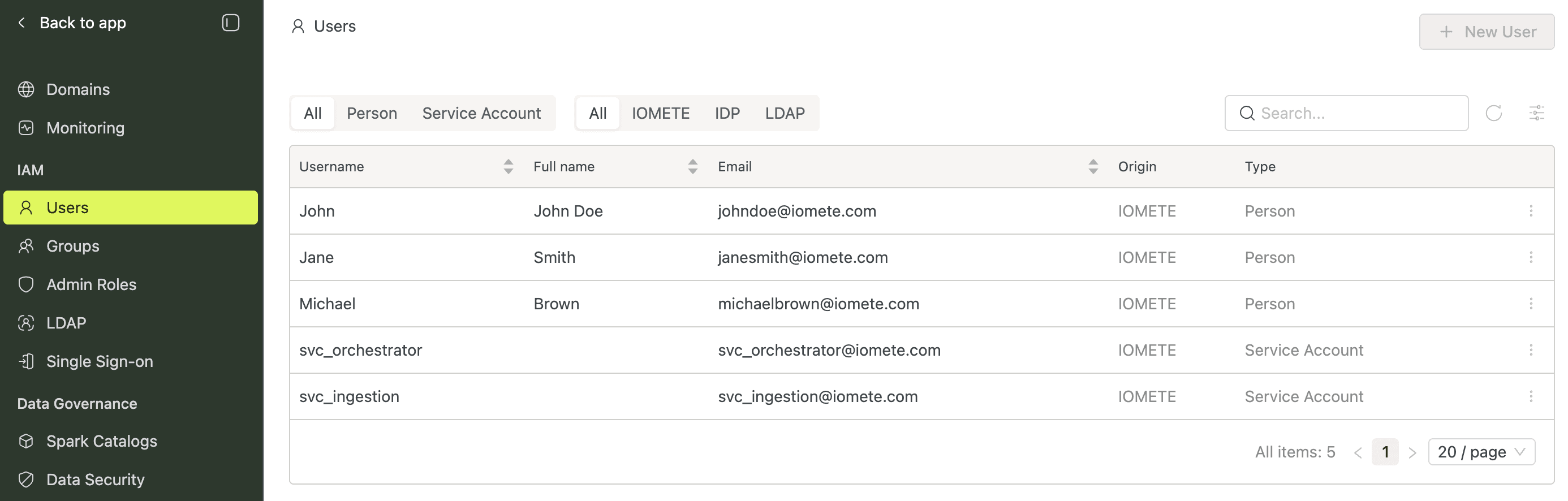
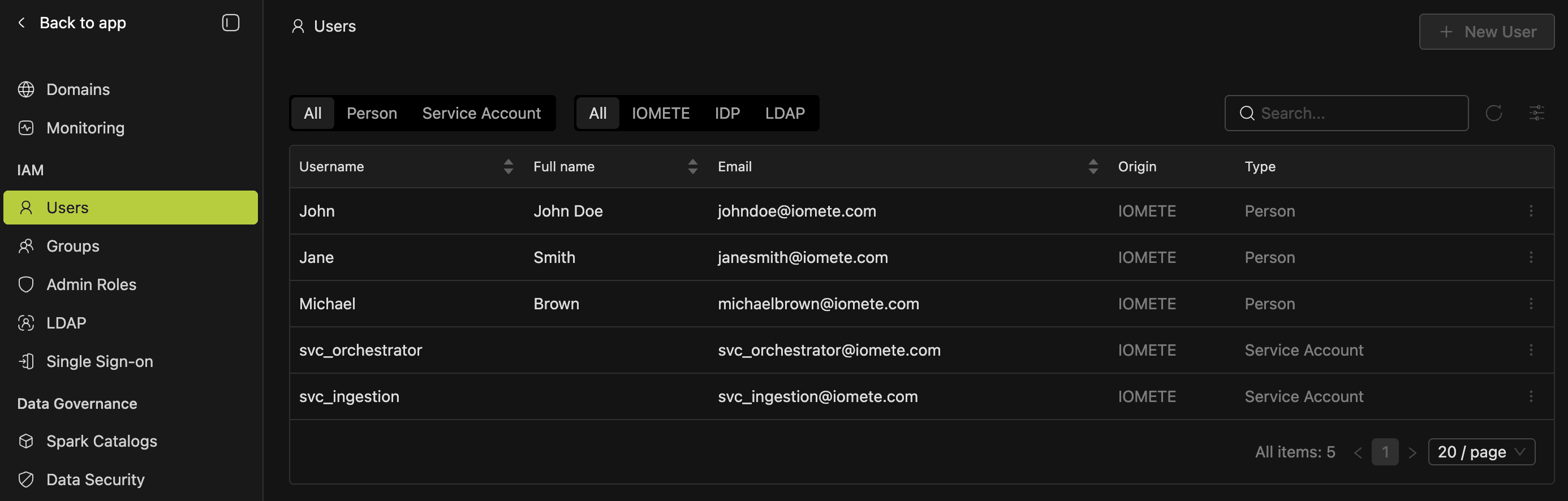
Table Columns
| Column | Description |
|---|---|
| Username | Unique identifier, linked to the user's detail page |
| Full name | First and last name combined |
| The user's email address | |
| Origin | How the account was created: IOMETE, LDAP, or IDP |
| Type | Person or Service Account |
| Actions | Dropdown menu with quick actions |
Filtering and Searching
Two segmented filters sit in the table header:
- Type:
All,Person, orService Account - Origin:
All,IOMETE,IDP, orLDAP
A free-text search field matches against username, first name, last name, and email (case-insensitive).


Creating a User
Adding accounts up front lets people start querying data the moment they log in.
-
On the Users list page, click New user in the top-right corner. A side drawer opens. (Without the IAM_MANAGER role, this button is disabled.)
-
Fill in the form:
- Username (required): letters, numbers, underscores, dots, and dashes only (max 128 characters). Always stored in lowercase.
- Email (optional): a valid email address.
- First name / Last name (optional): the user's given and family name.
-
Click Create.
-
If creation succeeds, the drawer displays a confirmation screen with a temporary password and a Copy button. Share this password with the user because they'll need to change it on first login.
-
Click Go to user details to open the new account's detail page.
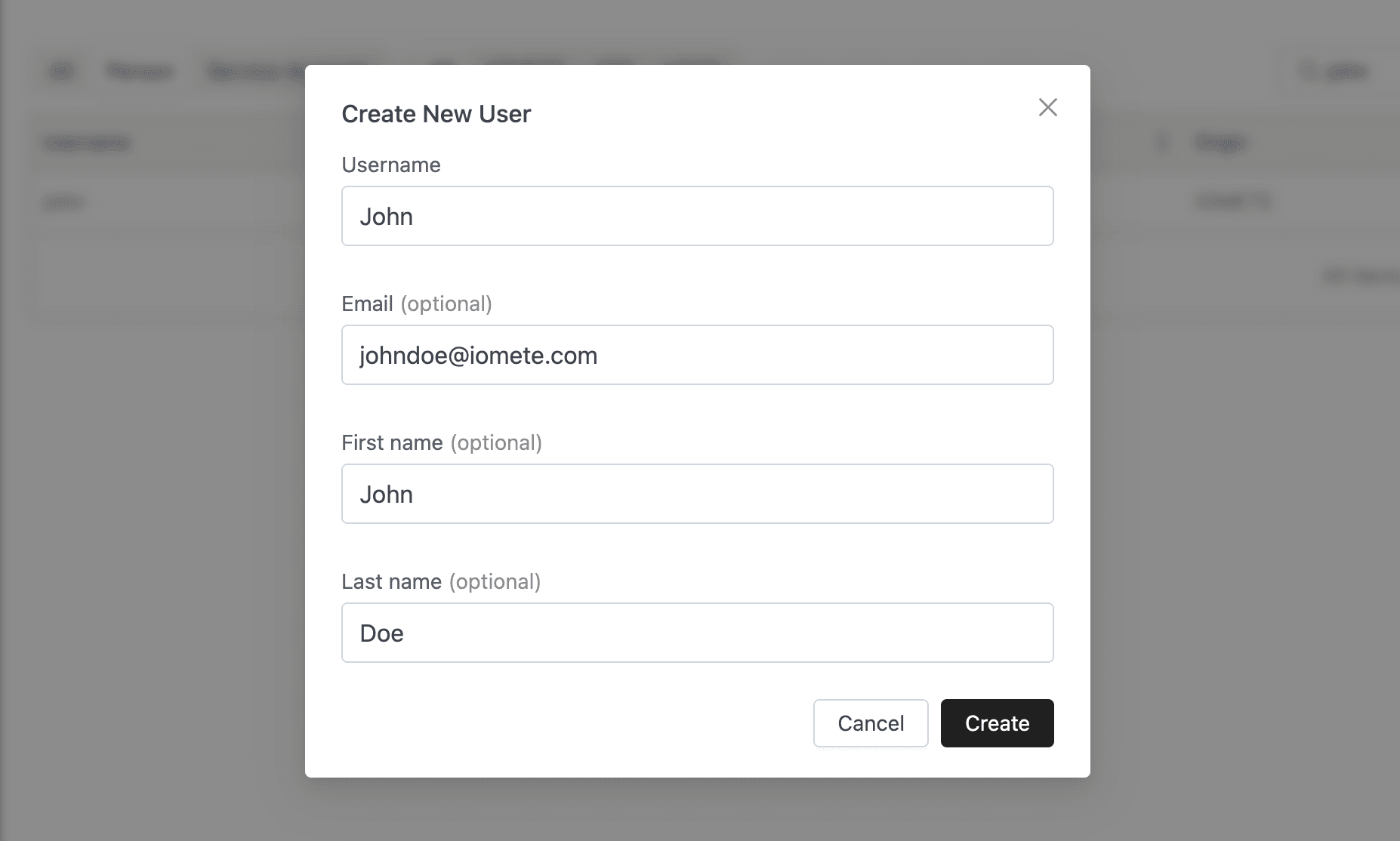
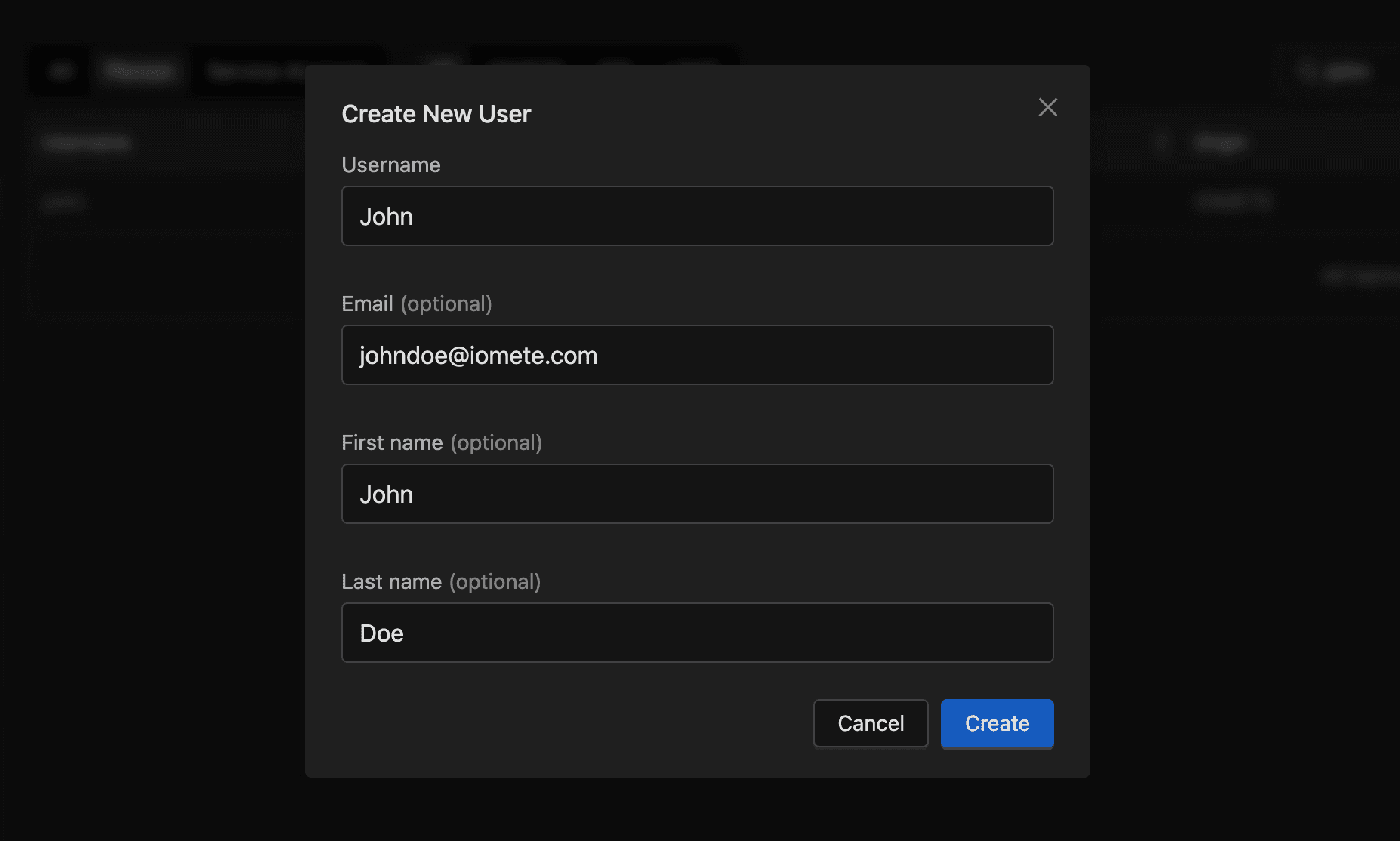
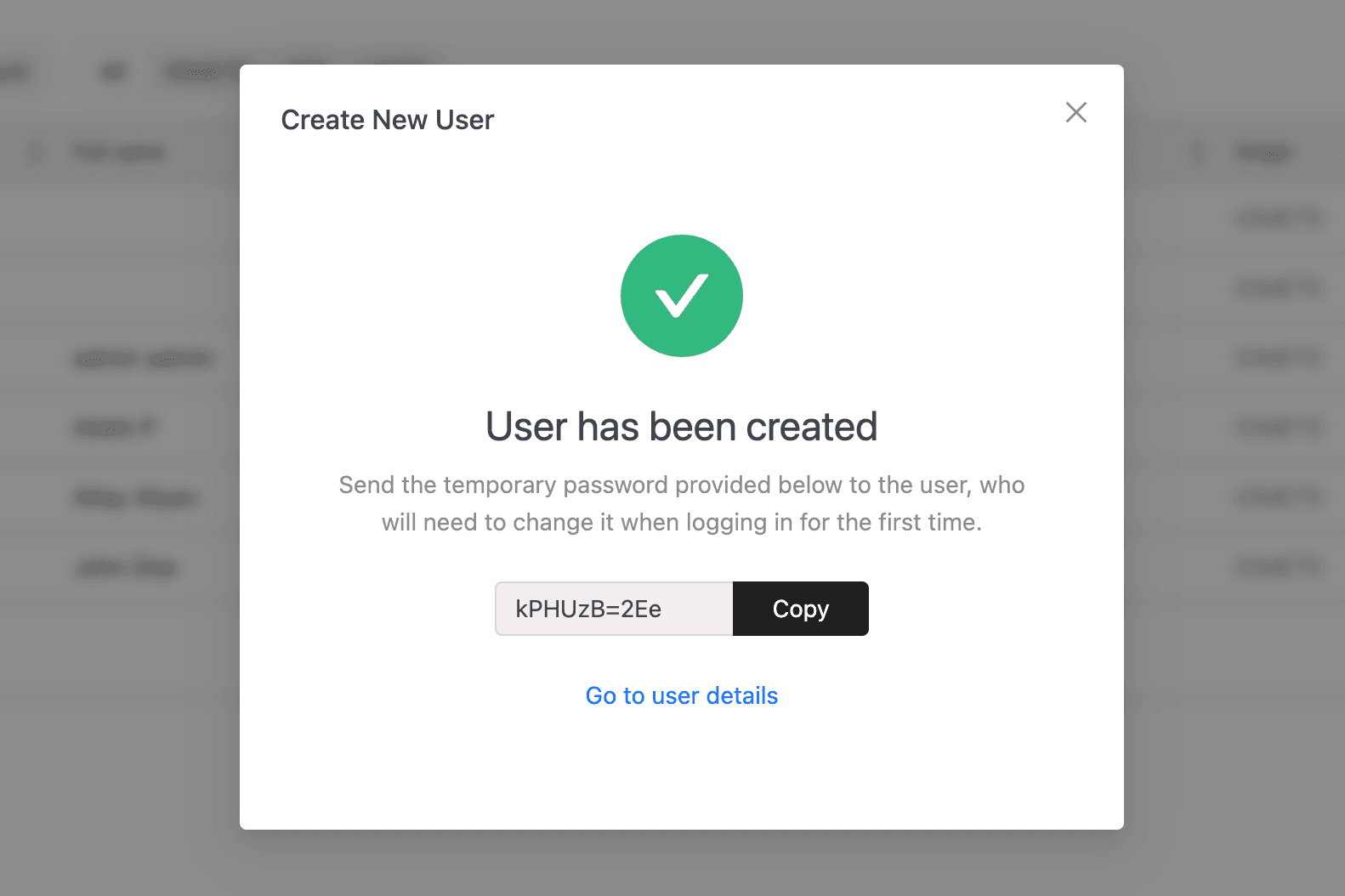
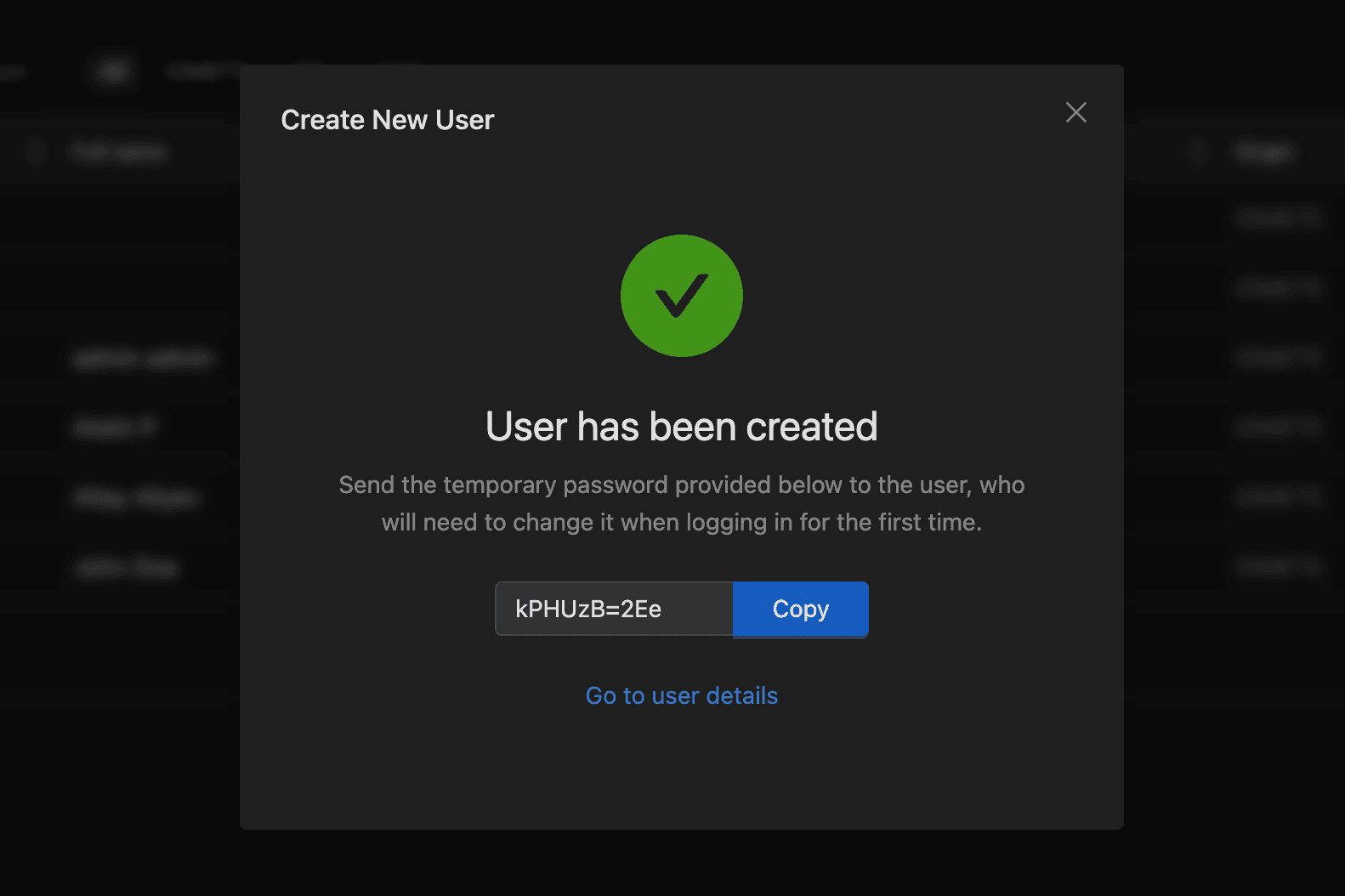
Usernames and emails must be unique across the platform. If either is already taken, the form highlights the field with a validation error.
First Login Experience
When the new user signs in with their temporary password, IOMETE redirects them to an Update Password page. They must choose a new password before they can proceed.
Viewing User Details
When you need the full picture of a single account, click any username in the list to open its detail page.
The top section displays the username, full name, email, origin, type, and who created the account (with a timestamp).
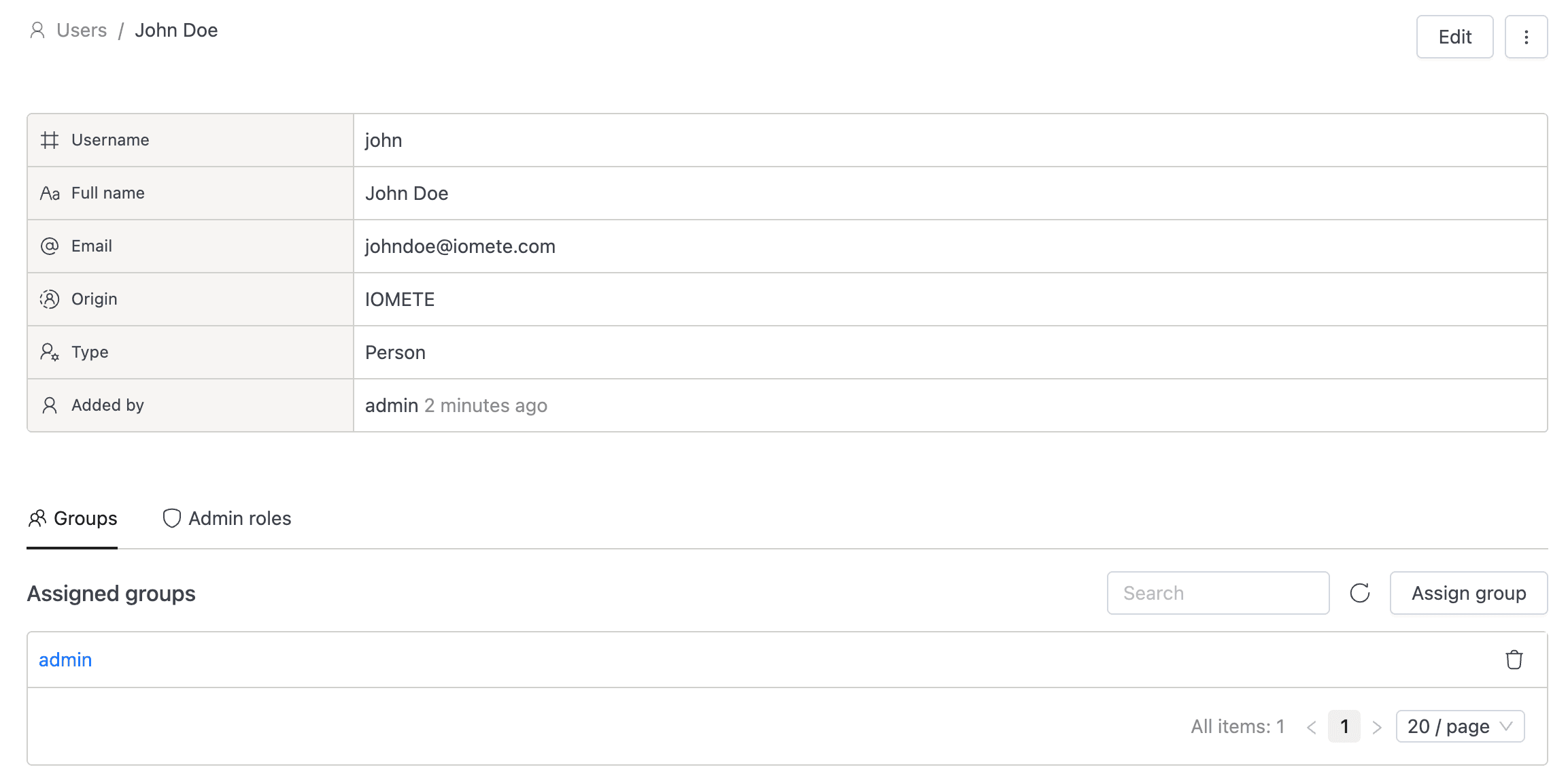
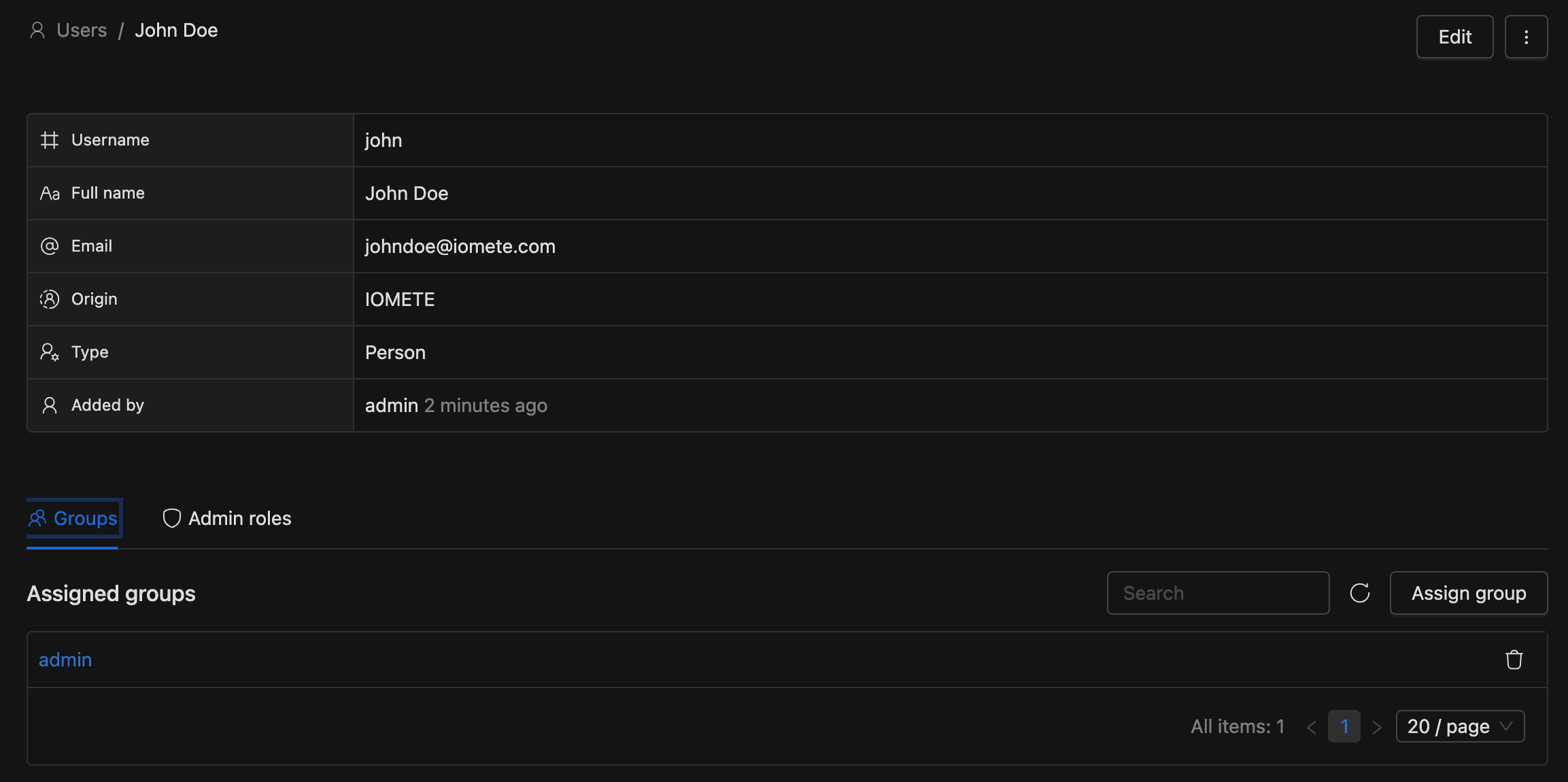
Below that, three tabs organize the remaining details:
- Groups: lists the groups this user belongs to (see Groups)
- Admin roles: lists the roles assigned to this user (see Roles)
- Access Tokens: only visible for
Service Accountusers; manages API access tokens
Managing Users
Day-to-day user management mostly involves editing profiles, resetting passwords, and toggling account types.


Editing a User
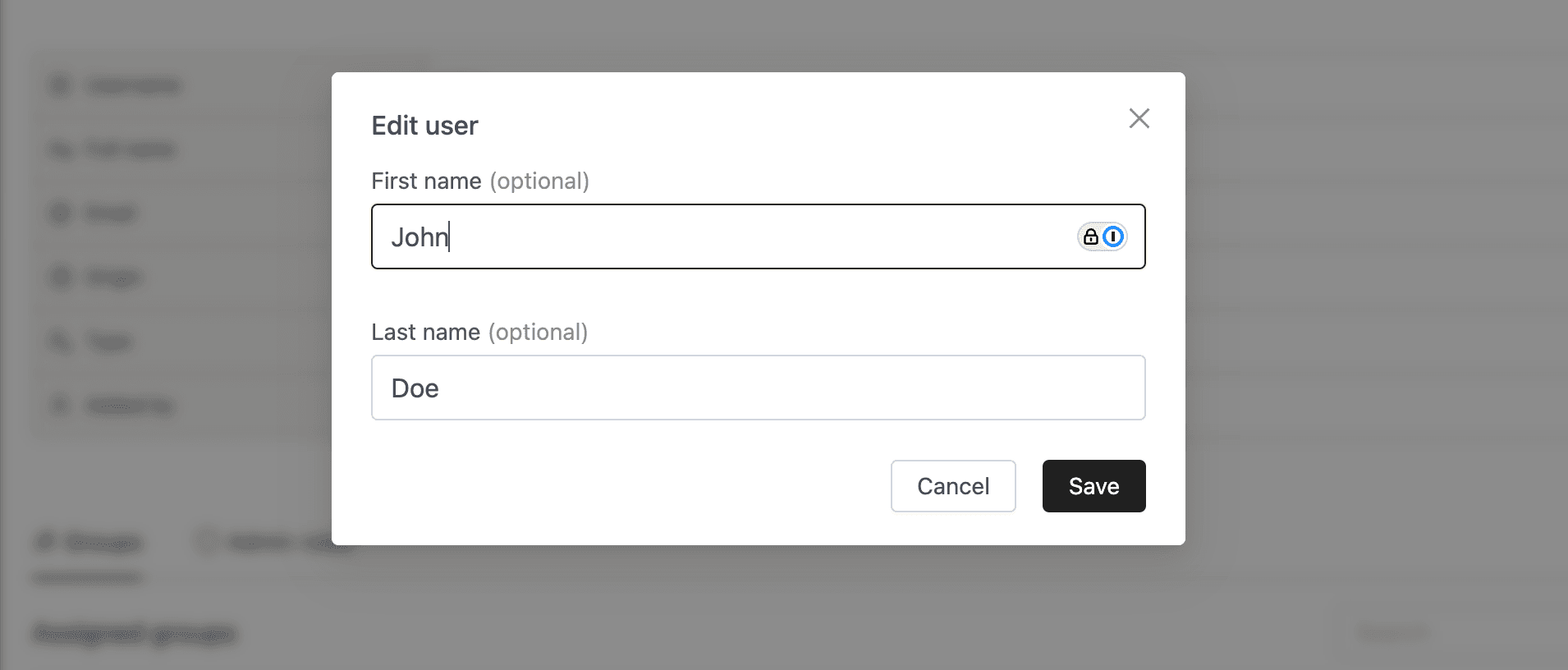
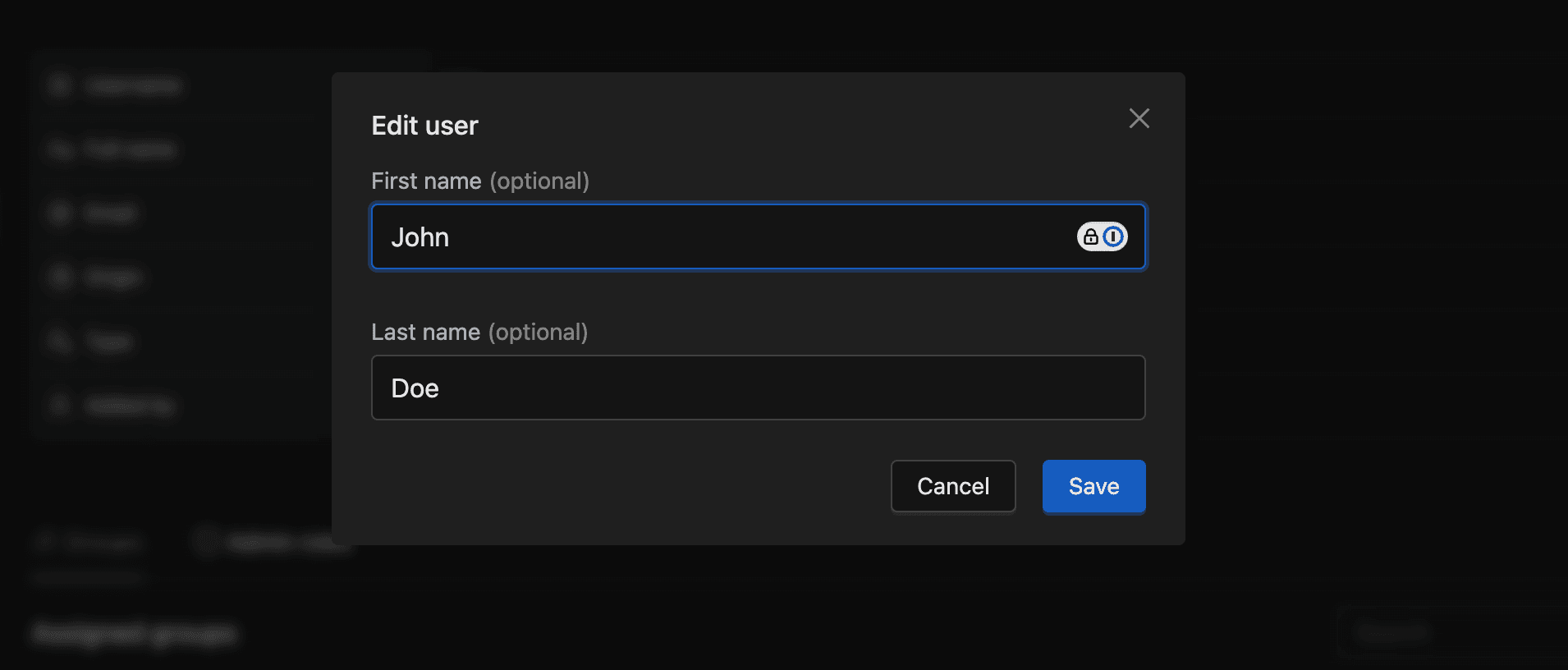
- On the user detail page, click Edit in the actions bar. A side drawer opens.
- Update the First name and Last name fields. (Username and Email are read-only.)
- Click Save changes.
Resetting a Password
Password resets only apply to IOMETE-origin users. LDAP and IDP users authenticate through their external identity provider, so there's nothing to reset here.
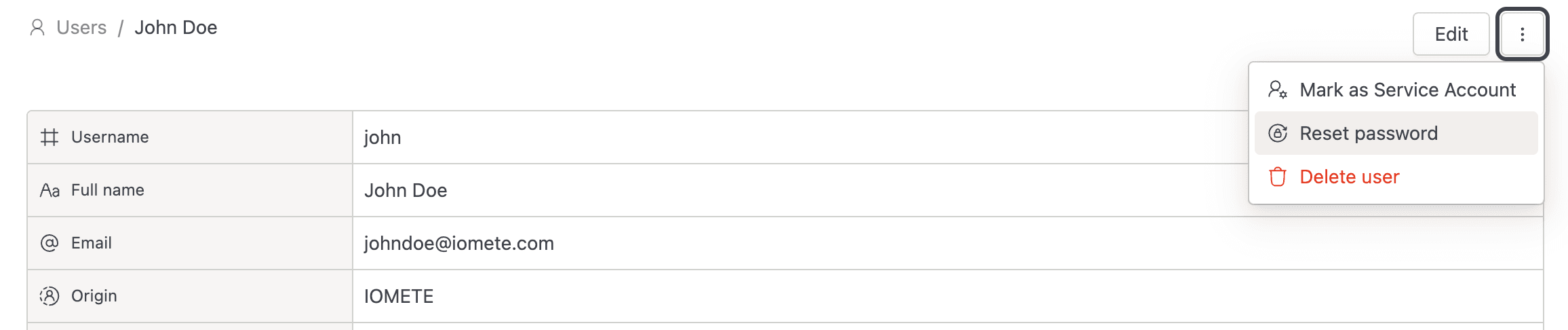
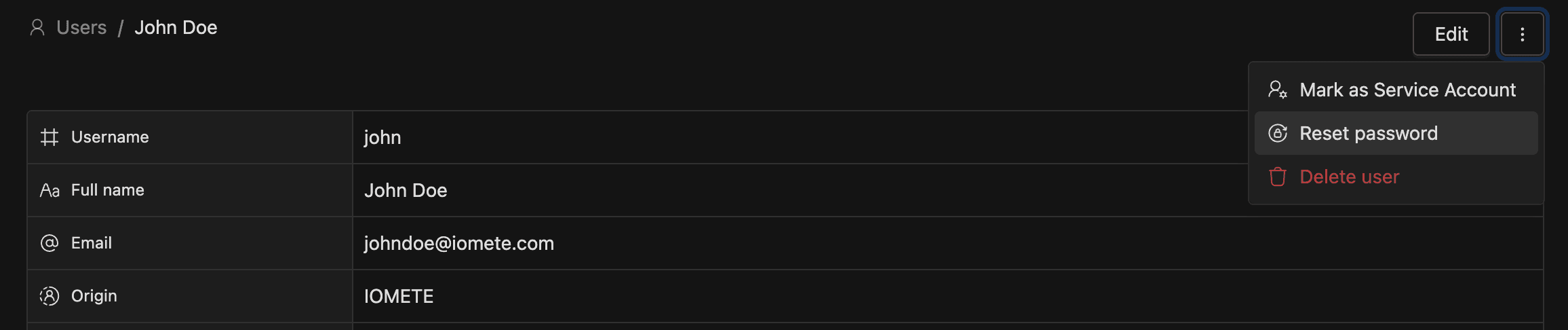
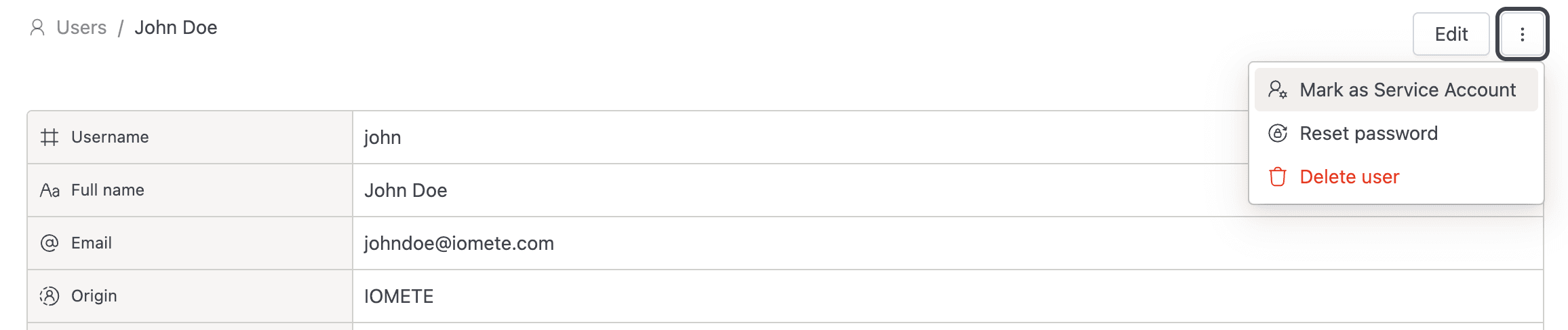
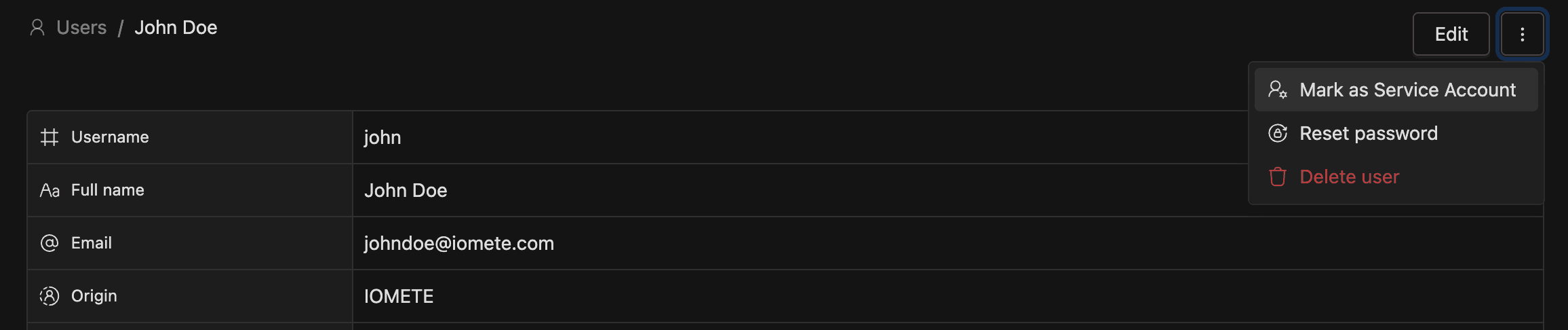
- On the user detail page, open the Actions dropdown and click Reset password.
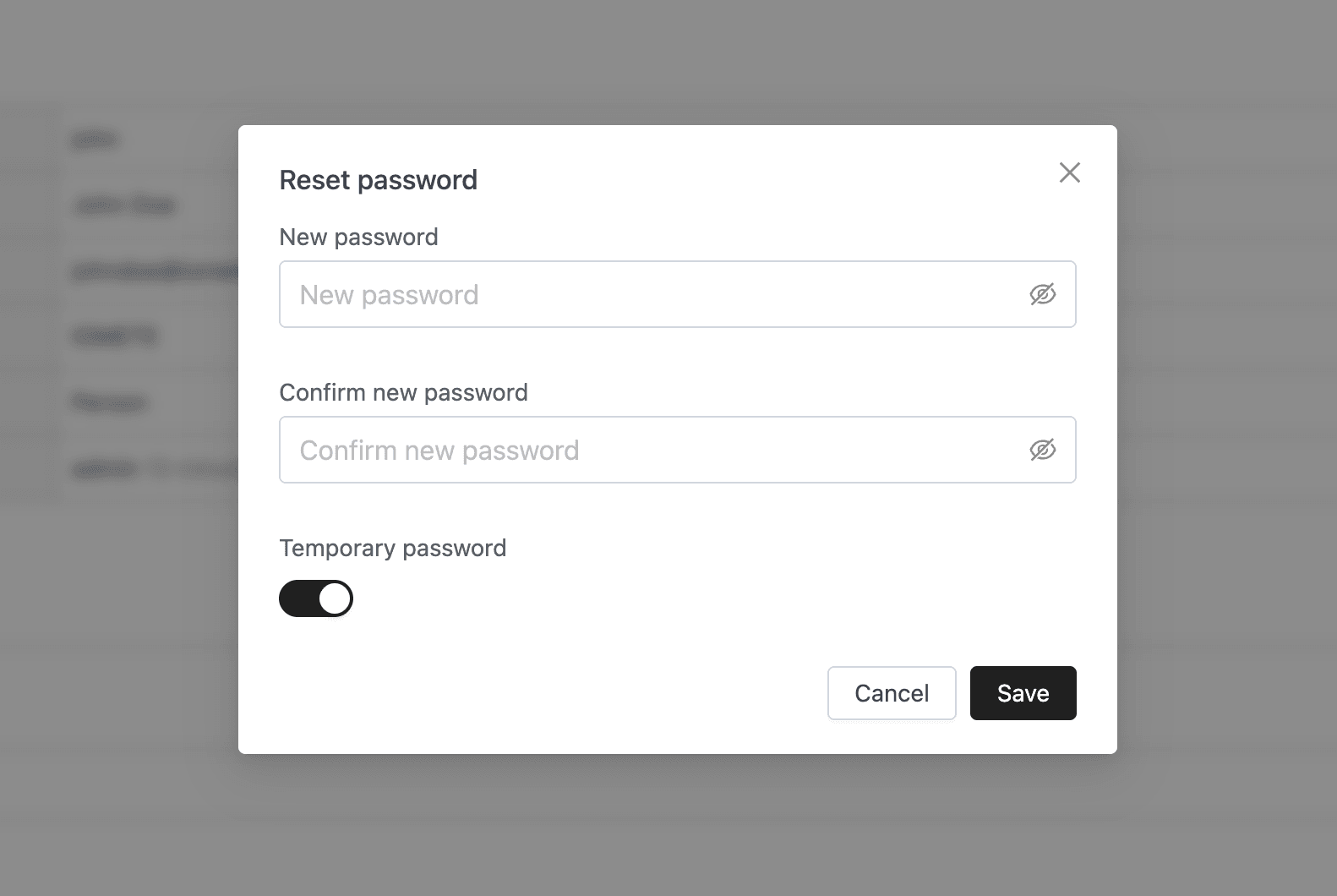
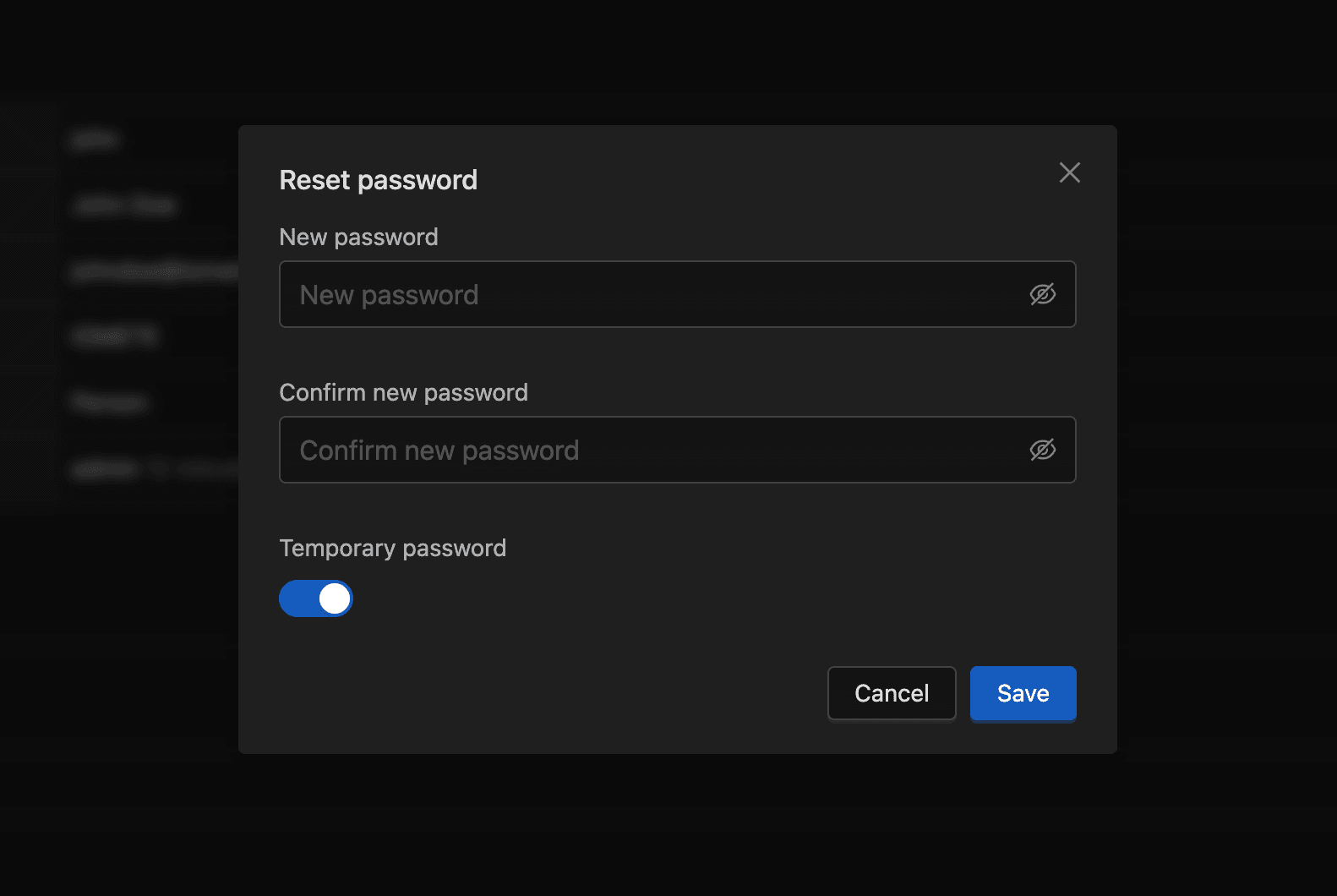
- Enter the New password, then confirm it in the Confirm new password field.
- The Temporary password toggle is on by default, forcing the user to pick a new password at next login. Turn it off if the password should persist.
- Click Save.
If the reset succeeds, a confirmation message appears. If the passwords don't match, the form highlights the mismatch with a validation error. Service accounts can't have their passwords reset.
Switching User Type (Person / Service Account)
If you need to convert a person's account into a service account (or the other way around):
- From the user list or detail page, open the Actions dropdown.
- Click Mark as Service Account or Mark as Personal Account, depending on the current type.
The change applies immediately. Once a user becomes a Service Account, an Access Tokens tab appears on their detail page.
Domain owners can't be marked as Service Accounts. If you try, IOMETE returns an error identifying the user as a domain owner.
Deleting a User
You can delete a user from either the list page or the detail page.
From the list page: open the Actions dropdown for that row, click Delete, then confirm with Yes, delete it.
From the detail page: open the Actions dropdown, click Delete user, then confirm. IOMETE redirects you back to the user list.
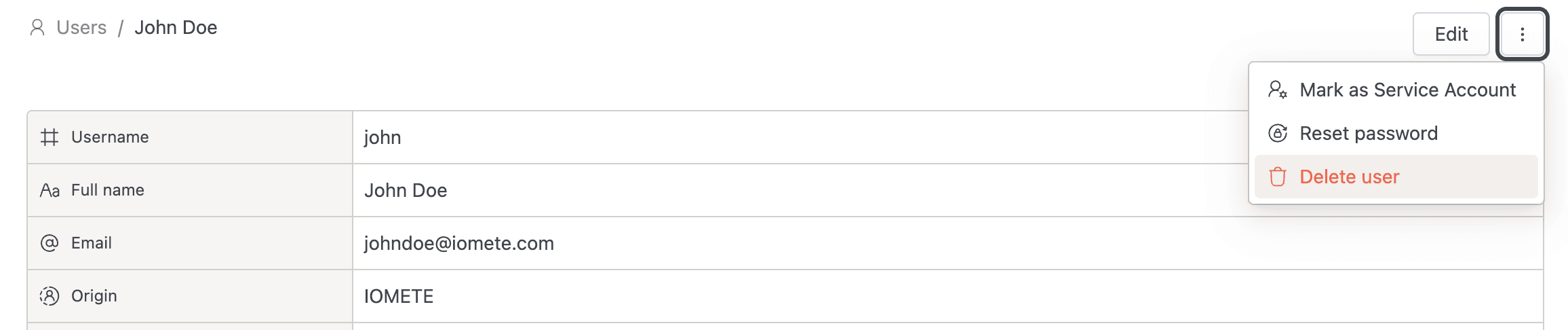
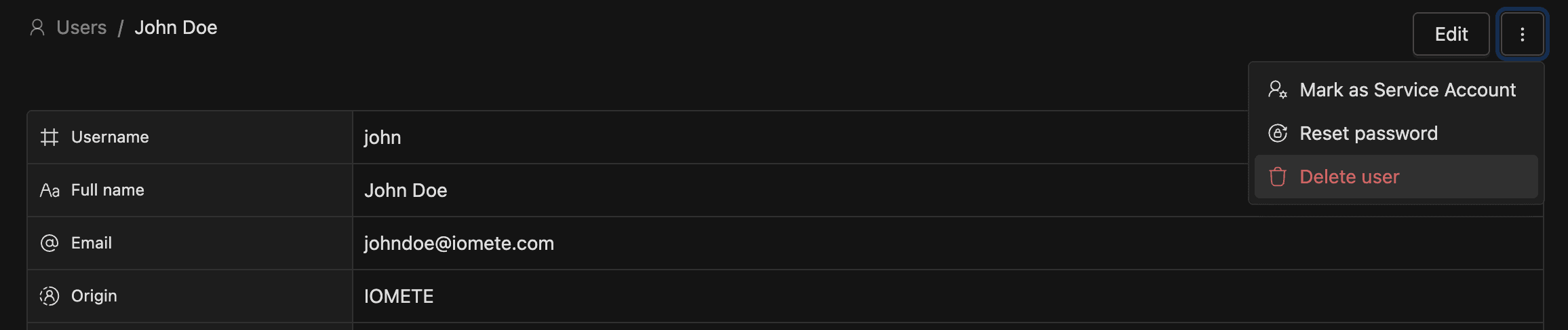
Deleting a user removes their role mappings, group memberships, and account permanently. This can't be undone.
Domain-Level Member View
If you're working inside the domain portal instead of the admin portal, users appear with a slightly different interface.
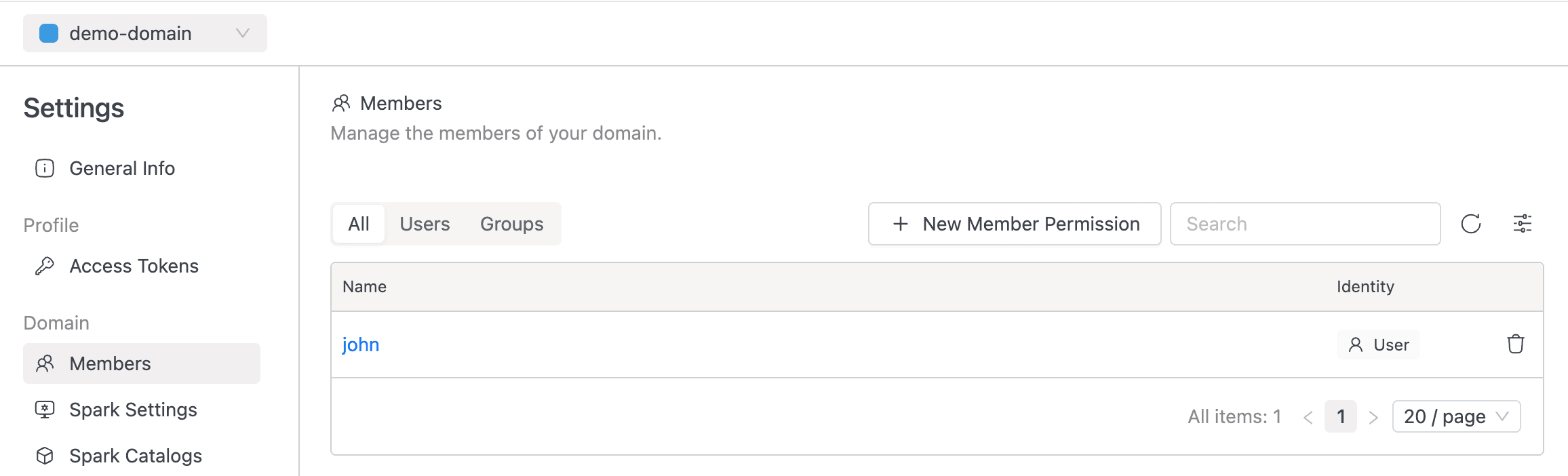
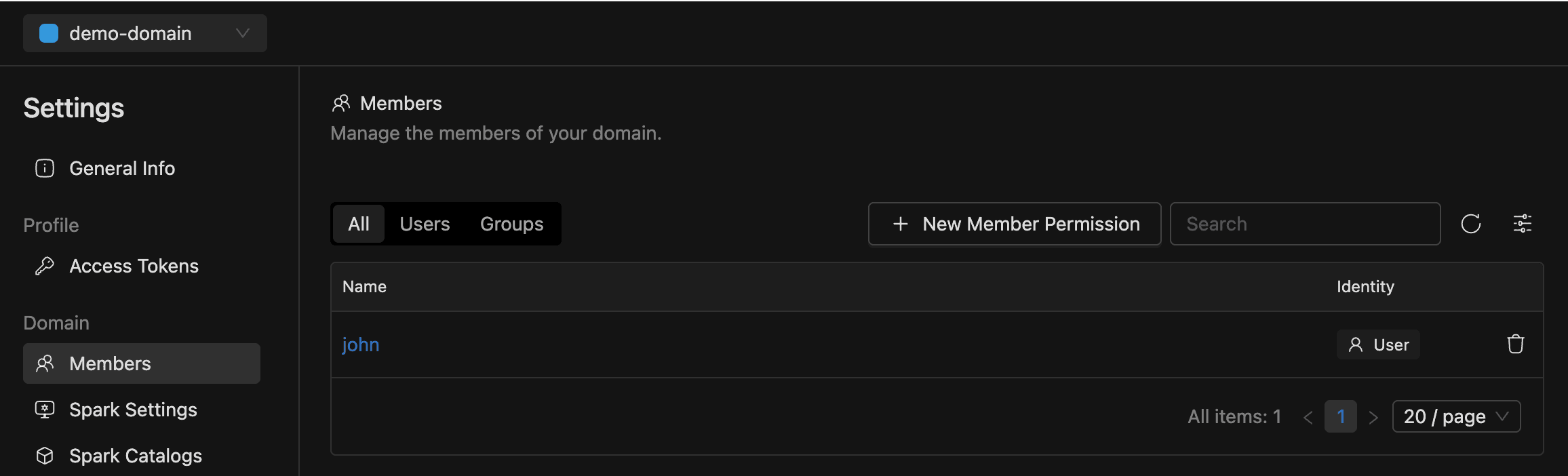
The domain-level detail view displays the same general info as the admin view, with two exceptions: the Added by field is hidden, and Type only appears for Service Accounts.
Three tabs are available:
- Groups: a read-only list of group memberships. You can't assign or remove groups from here.
- Roles: domain-scoped roles that you can assign and remove (requires the
iam_settingsmanagepermission). Each role indicates whether it's directly assigned or inherited from a group. - Access Tokens: only visible for Service Account users. Manages domain-scoped access tokens.
If the domain-level bundle authorization module is enabled, the Roles tab is replaced by a Permissions tab listing direct permissions assigned to the user in the domain bundle.
Access Permissions
The tables below map every operation to the role or permission it requires.
Admin Portal
| Operation | Required Role |
|---|---|
| View user list and details | Any admin role |
| Create, edit, or delete a user | IAM_MANAGER |
| Reset a password | IAM_MANAGER |
| Toggle user type | IAM_MANAGER |
| Assign/remove groups | IAM_MANAGER |
| Assign/remove admin roles | IAM_MANAGER |
If you lack the required role, action buttons appear disabled with a tooltip explaining why.
Domain Portal
| Operation | Required Permission |
|---|---|
| View member details and groups | Domain member |
| Assign/remove domain roles | iam_settings service, manage action |
Related Features
- Groups: assign users to groups so they inherit roles collectively.
- Roles: assign domain-level roles to users as members.
- LDAP Configuration: sync users from an external LDAP directory.
- Single Sign-On: provision users through identity provider flows (SAML/OIDC).