Access Token
You can create an access token to use in place of a password with the IOMETE API.
Access tokens are an alternative to using passwords for authentication to IOMETE when using IOMETE API. In this article, we will explain to you how to create and use Access Tokens for IOMETE API.
Create new access token
To manage access tokens navigate to Settings -> Access Tokens tab. To create new access token click Generate new token button.
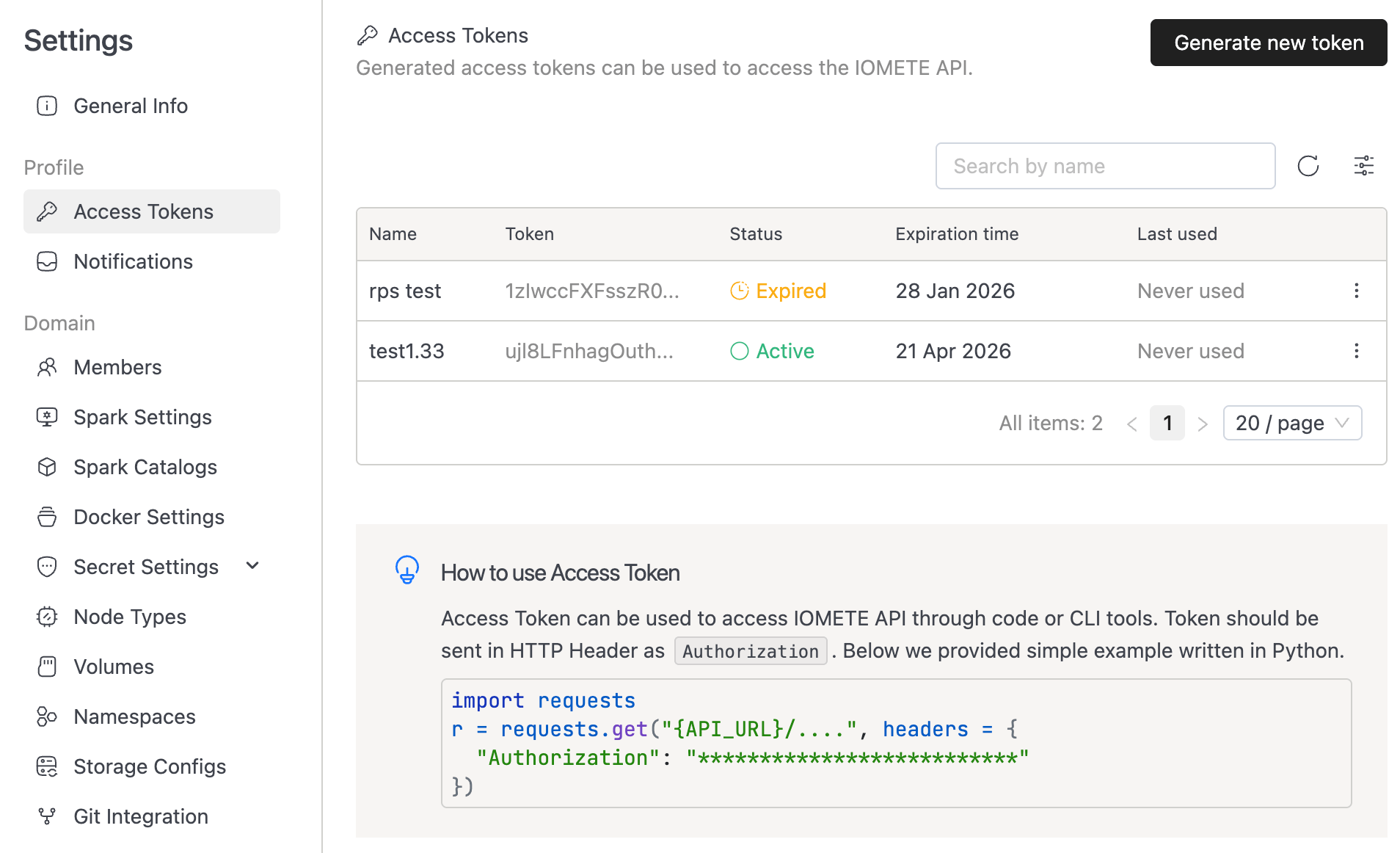
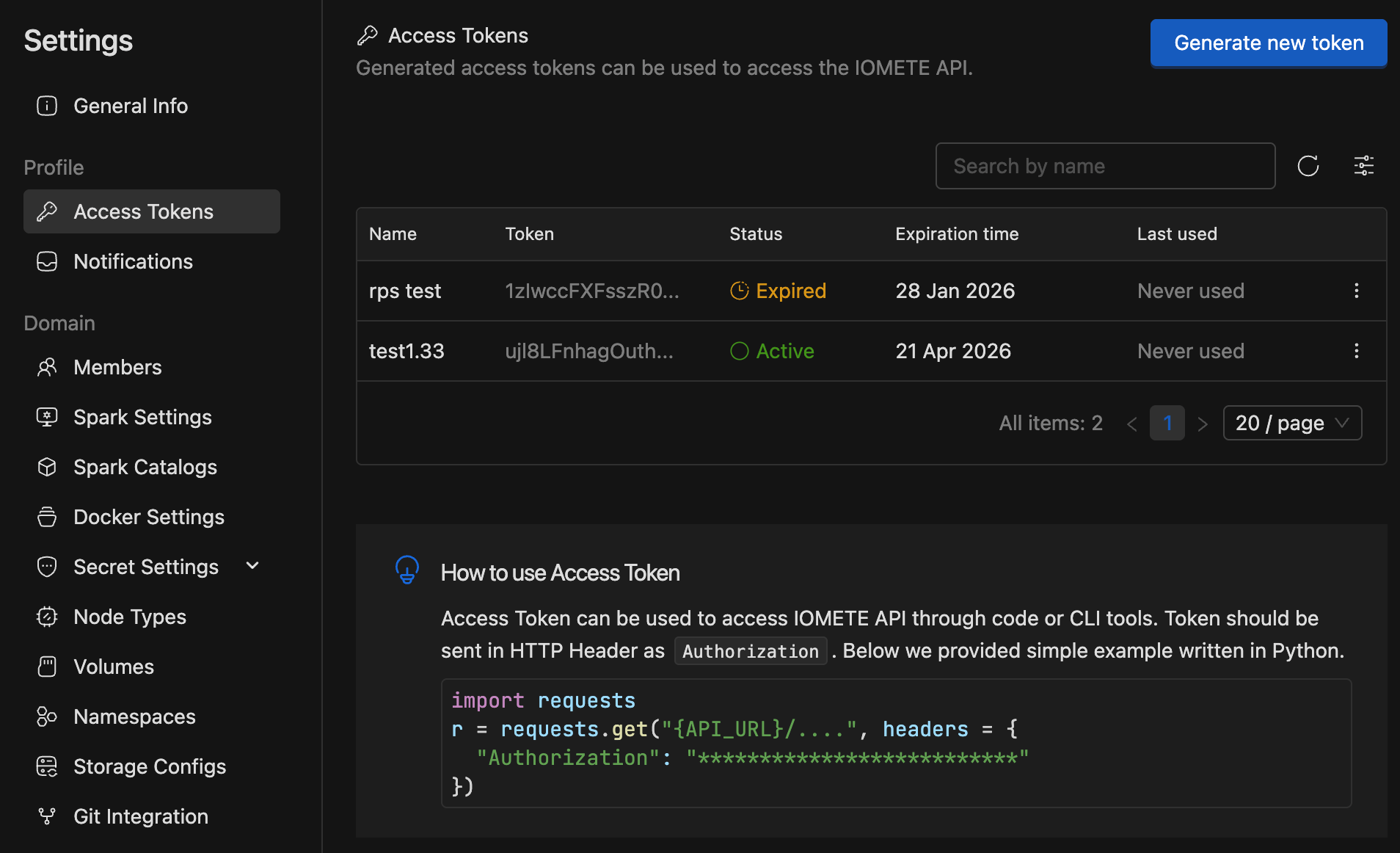
In the form includes following fields:
- Token name: A descriptive name for the token to identify its purpose.
- Max RPS: (Optional) Maximum requests per second allowed for this token.
- Expiration: (Optional) Set an expiration date for the token to enhance security.
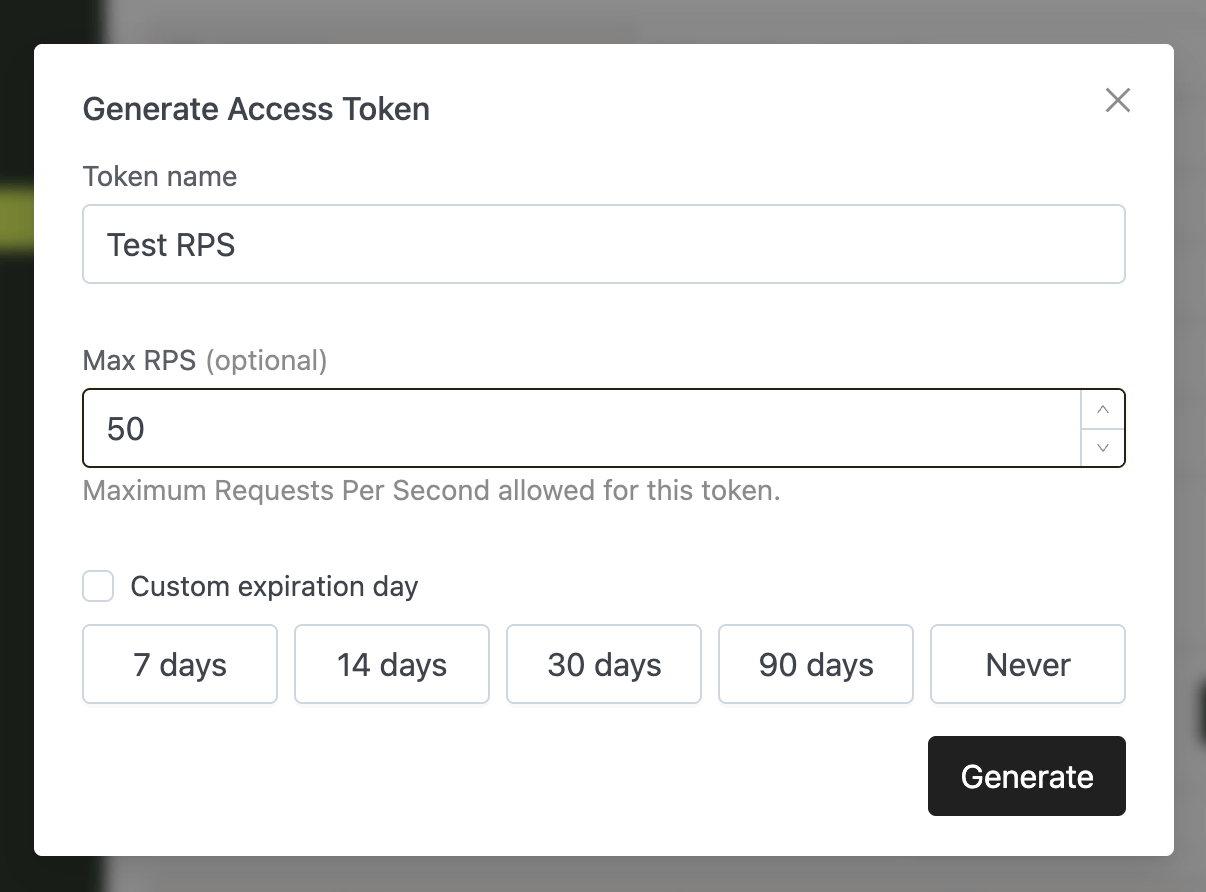
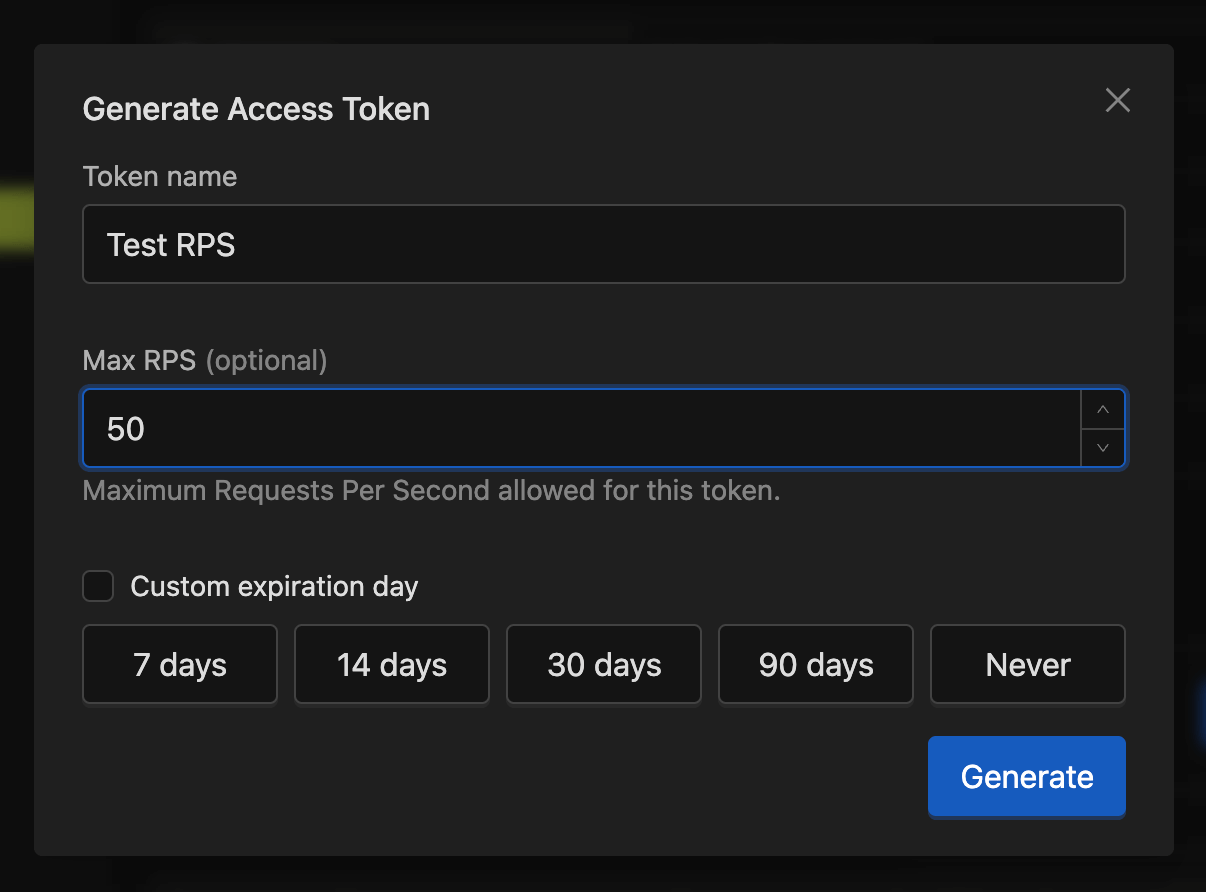
Once you filled inputs click to Generate. That is it! You have successfully created an access token. You can copy the token value and use it for authentication in your API requests.
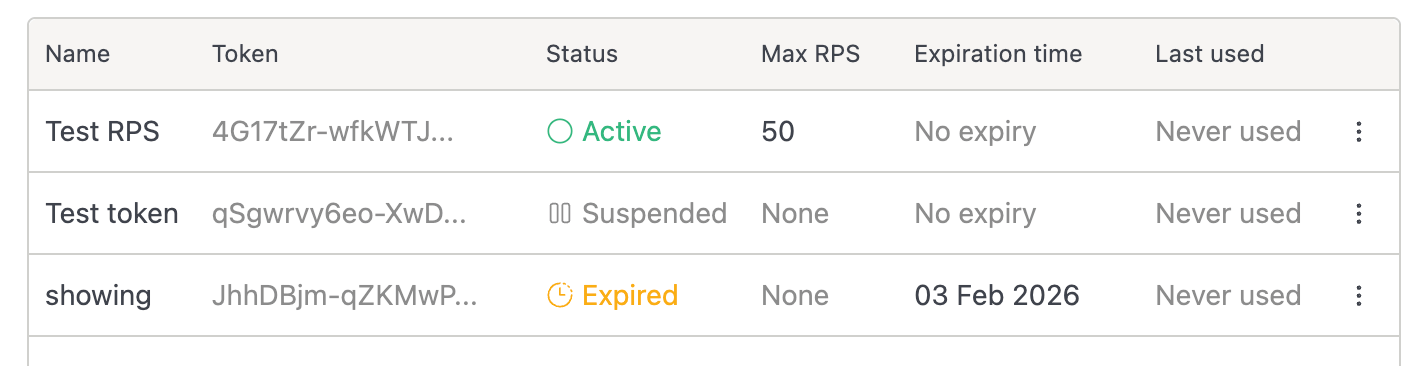
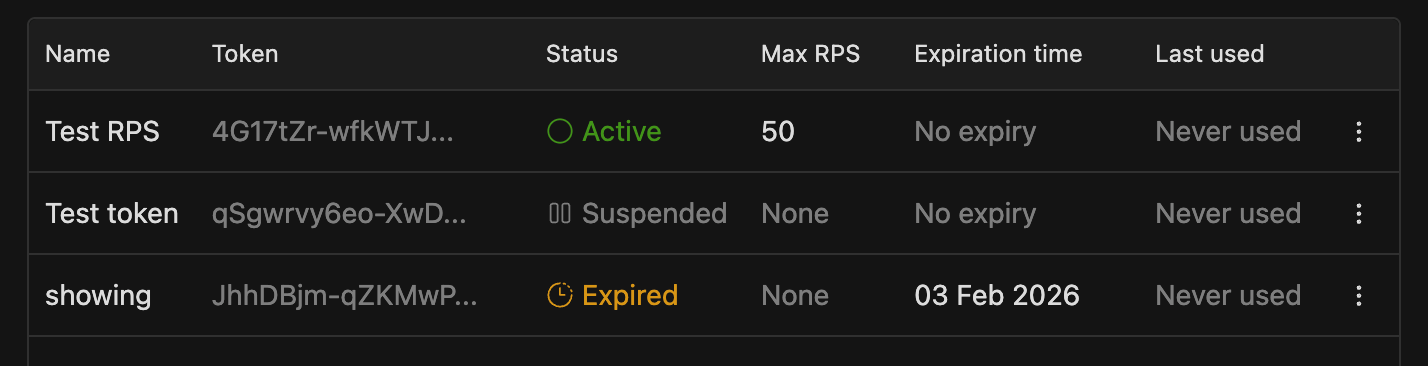
IOMETE API can be accessed through code or CLI tools using the Access Token. You should send the API token in the HTTP header X-API-Token. Below we provided simple example written in Python.
You will see your IOMETE region host instead of {your_iomete_account_host}
 import requests

  r = requests.get("https://{your_iomete_account_host}/api/v1/....", headers = {
	  "X-API-Token": "**************************"
  })
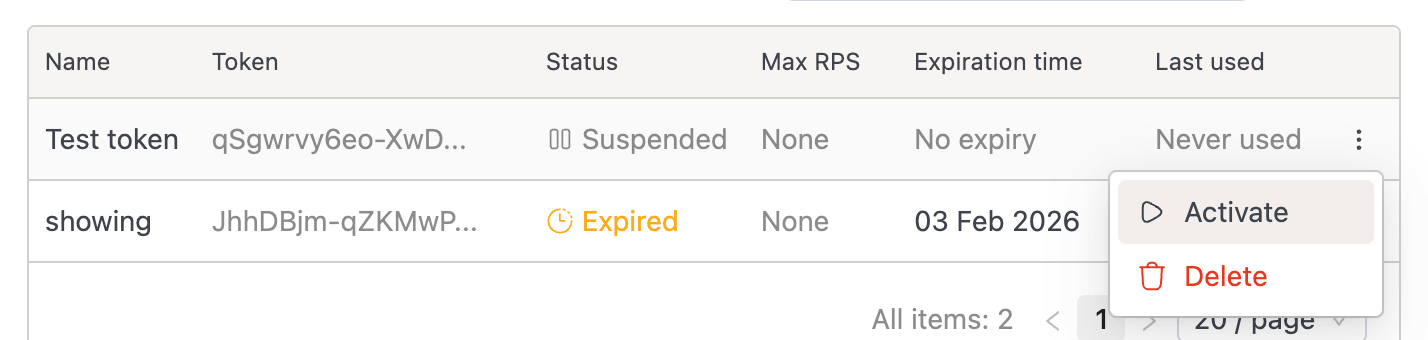
Suspending and Reactivating Tokens
Access tokens can be suspended to immediately block all requests using that token, without deleting it. This is useful for:
- Temporarily disabling a misbehaving client
- Revoking access during an investigation
- Rotating access without recreating tokens
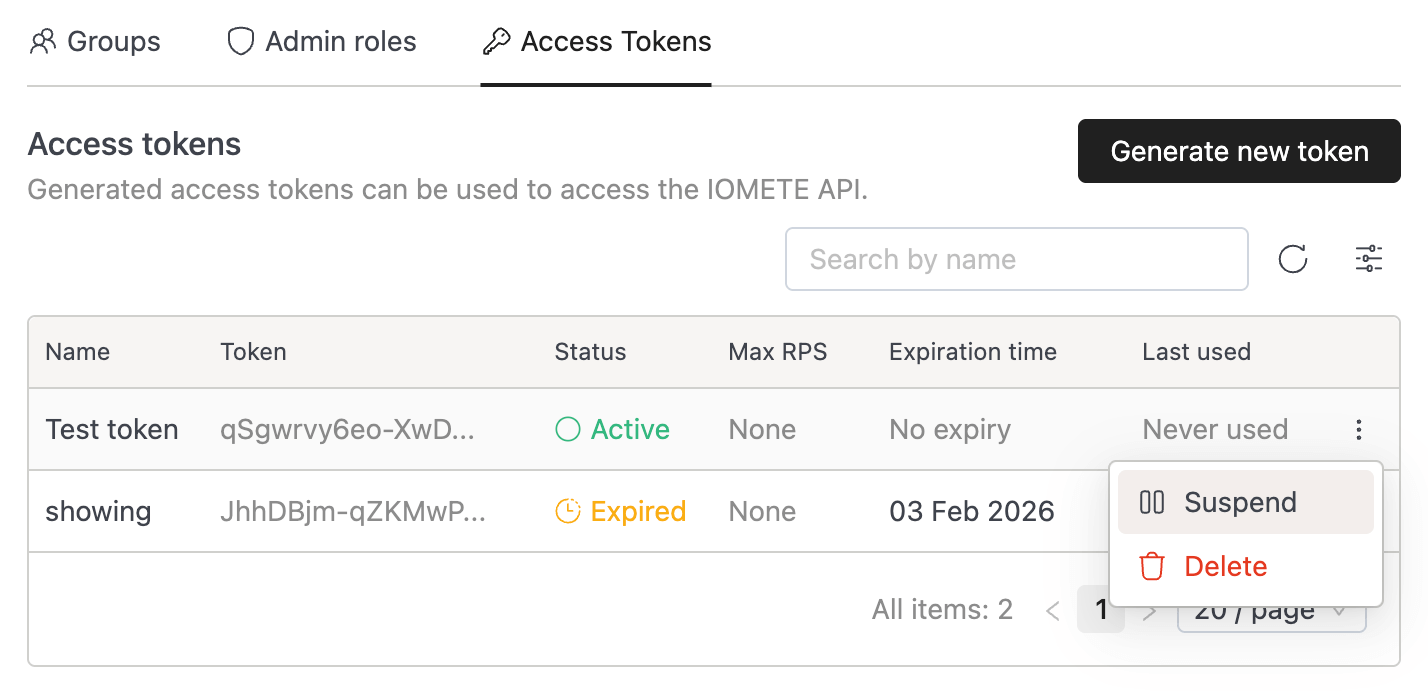
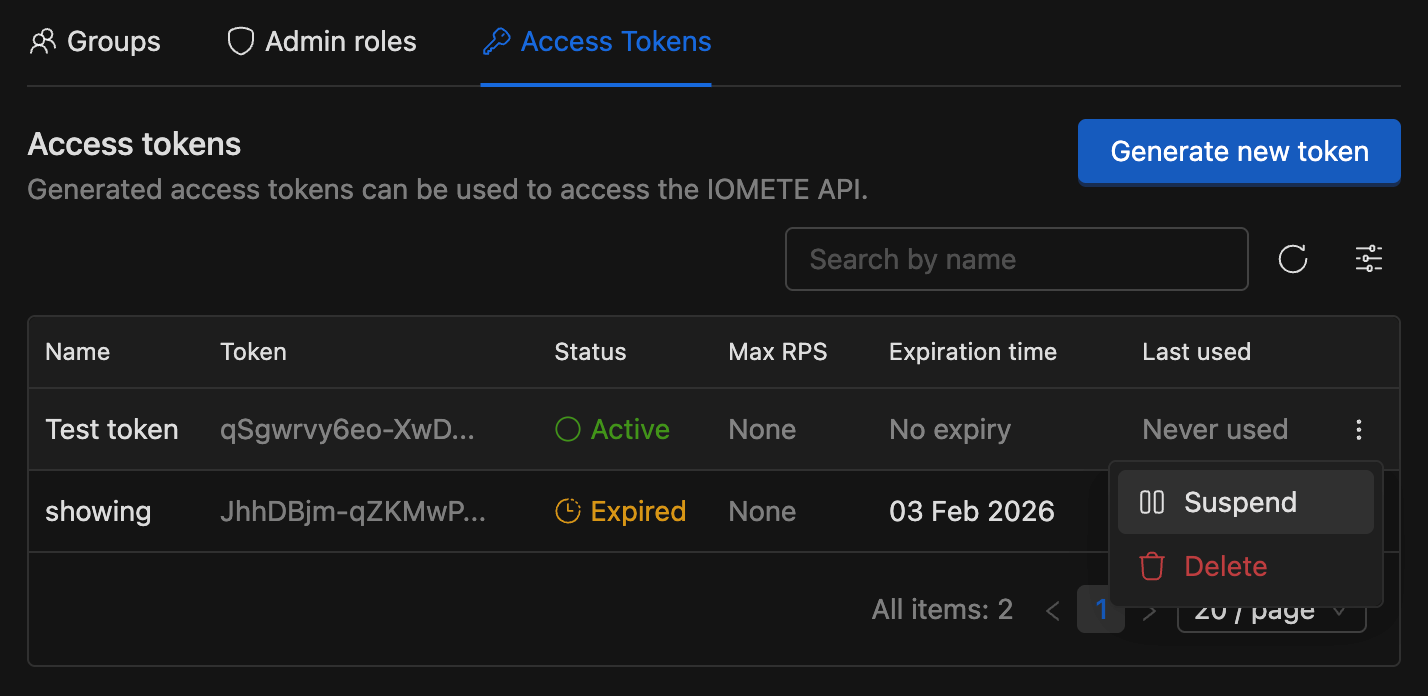
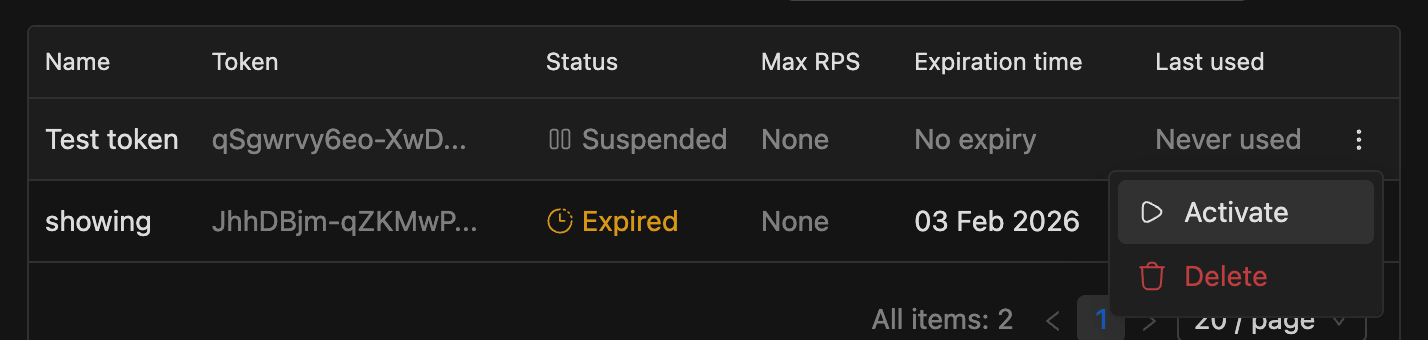
A suspended token can be reactivated at any time to restore access. No service restart or redeployment is required.
Rate Limiting (maxRPS)
Each access token can have a maximum requests per second (maxRPS) configured. When set, the token is rate-limited at the Iceberg REST Catalog level.
This is useful for controlling external client throughput and preventing any single client from overwhelming the catalog.
Rate limiting requires the features.ratelimiter.enabled Helm flag to be set to true. See the Iceberg REST Catalog — Rate Limiting documentation for details.