Apache Iceberg in on-prem

For on-premise data storages, streamlining data operations is a key requirement to maintain efficiency and reduce operational costs. Apache Iceberg is reshaping how companies store and analyze huge amounts of data. It's an open table format that's making big waves in the tech world. Here's the cool part: IOMETE, a data lakehouse platform, is built on Apache Iceberg. It comes with fantastic features like ACID transactions, time travel, snapshots, schema evolution, data versioning, concurrency control, metadata management, and partitioning. Plus, it's powered by the open Apache Spark engine. Together, Iceberg and Spark make IOMETE super fast, adaptable, and able to grow with your needs.

Apache Iceberg's Role in Local Servers
Iceberg is like a magic tool for handling massive data in a "lakehouse" system. Don't worry, it doesn't actually store your data – it just organizes it in a super smart way. This means your data is not only safer but also more accurate and easier to use. It speeds up how you search and query through your data, a big help when you're not using powerful cloud-based systems.
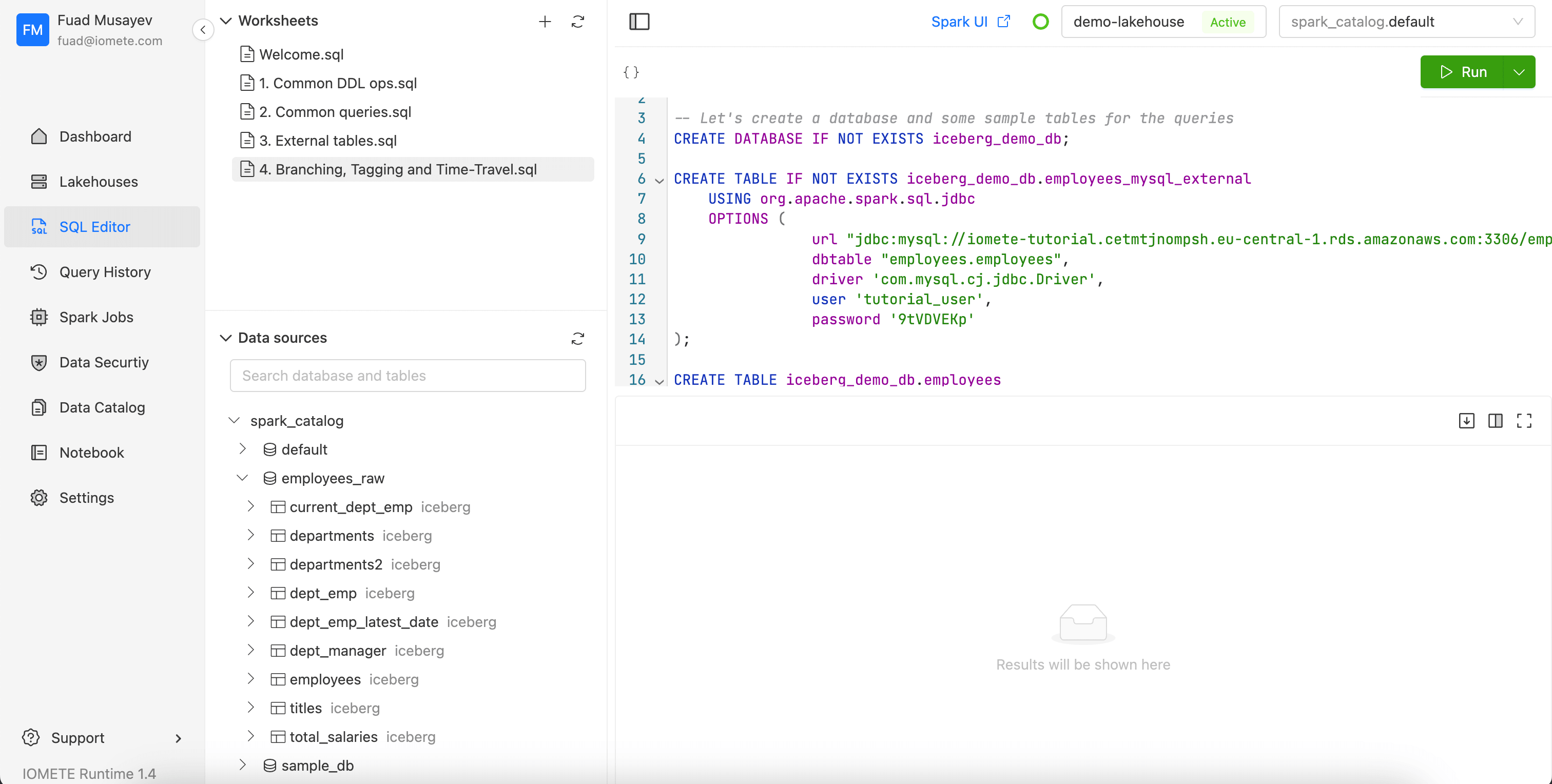
IOMETE: Handling Lots of Data
We've got IOMETE running on Kubernetes, dealing with data stored in object storage. This combo maximizes your data's potential. Iceberg steps in to give your data structure and ease of use.
Our setup involves object storage for all types of data, which is crucial for advanced analytics and machine learning. The lakehouse approach merges the best of cloud data management in your local environments. Iceberg is just a table format in this setup.
You can easily find your data from a mass storage using data catalog. It is a super-organized filing system for your data. In an on-premise setup, where you might have tons of data in different formats, Iceberg's catalog brings order to potential chaos.
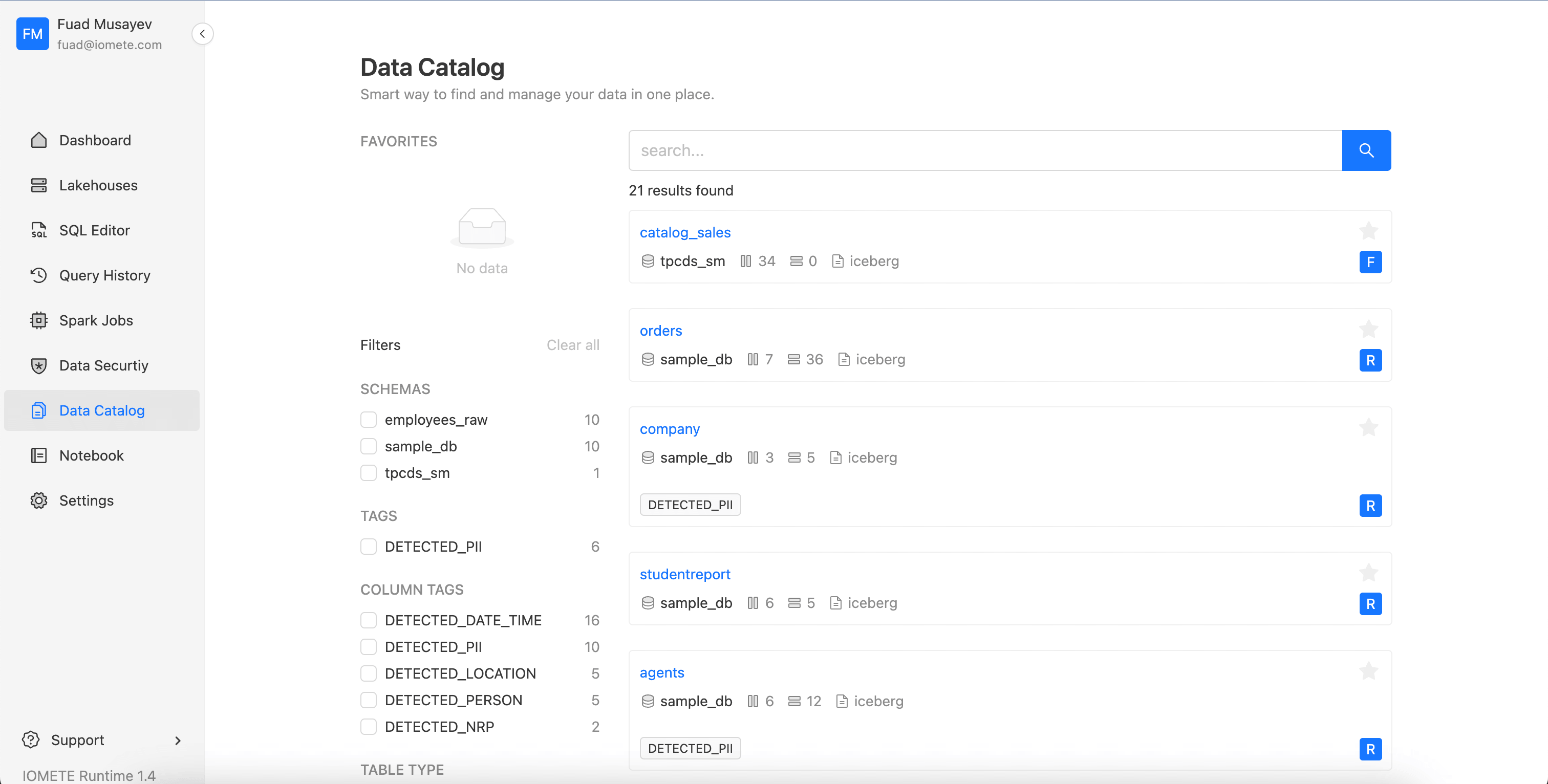
You can have better control over your data, ensuring that only the right people have access to the right information. Plus, it's easier to comply with data security and privacy regulations (backed by Apache Ranger).
Iceberg in Action: Simplifying Data Usage
Apache Iceberg really proves its value when you start organizing and using your data. You don’t need to migrate your data to IOMETE. Your data stays right on your server, and Iceberg makes sifting through it quicker and handles data changes like a pro.
Conclusion
In a nutshell, Apache Iceberg can transform a local data storage system into a powerful, feature-rich lakehouse. It improves on traditional data storage methods, helping you get the most from large data sets. Interested in using it in your on-premise setup? We're here to help. Just hit "Book a Demo" and see how it works for your specific needs.