IOMETE Core Components Technical Architecture

IOMETE Core Components Technical Architecture
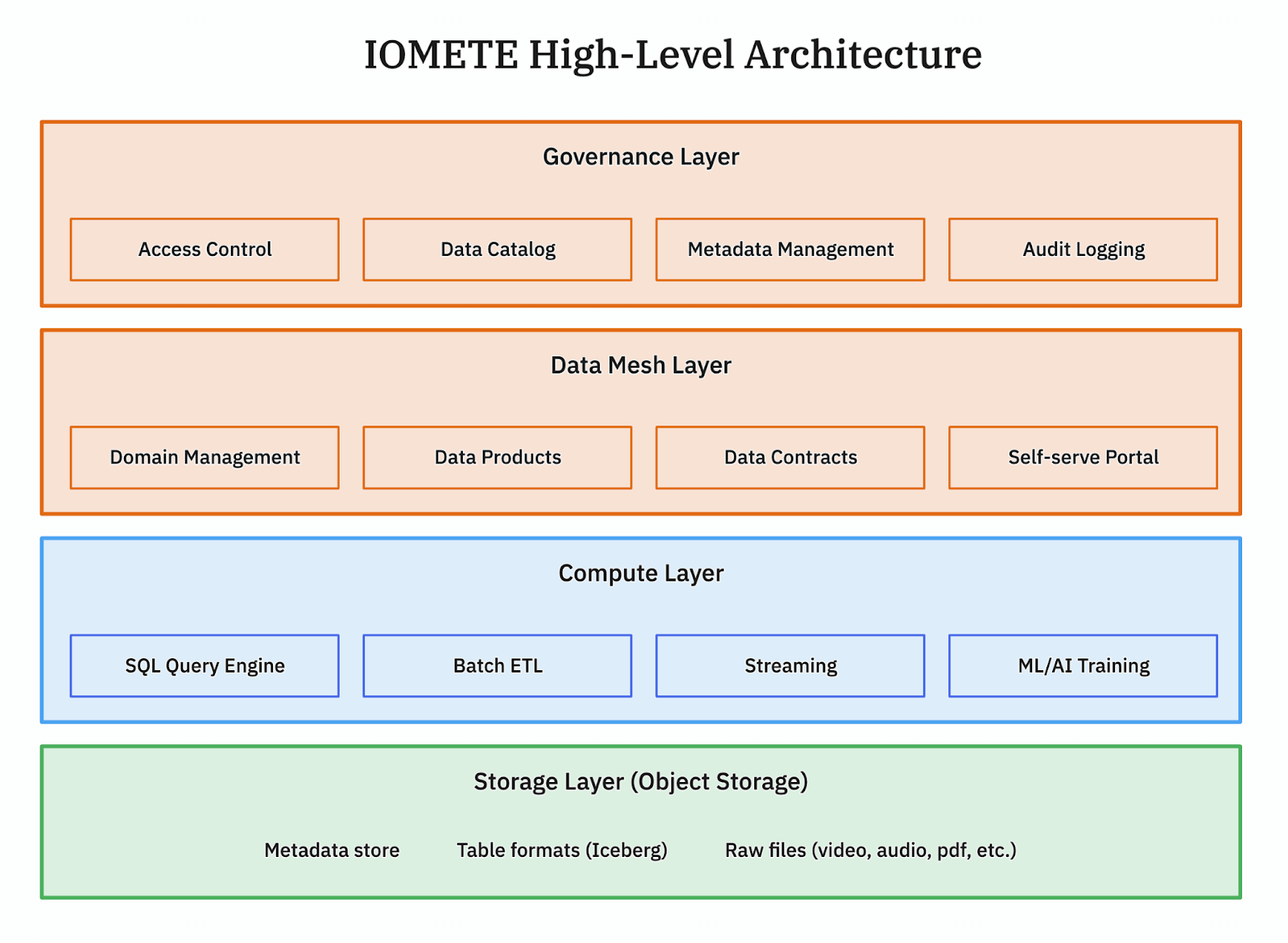
IOMETE's architecture is built on four fundamental layers, each providing essential capabilities for enterprise data management. Let's examine each layer in detail.
Storage Layer
The storage layer forms the foundation of IOMETE's architecture. It implements a multi-tier storage strategy that combines the cost-effectiveness of object storage with high-performance data access patterns.
At its core, the storage layer uses object storage (such as MinIO for on-premises deployments or native cloud storage services) to provide the primary data repository. This is enhanced by Apache Iceberg, which provides ACID transactions, schema evolution, and time travel capabilities. The metadata store maintains table schemas, statistics, and optimization information, enabling efficient query planning and execution.
The storage layer implements sophisticated data organization strategies, including data clustering, partitioning, and compaction. These capabilities ensure optimal performance while maintaining storage efficiency. The layer also handles data lifecycle management, automatically moving data between storage tiers based on access patterns and organizational policies.
Compute Layer
IOMETE's compute layer provides the processing capabilities needed for diverse enterprise workloads. It consists of four main components:
The Query Engine handles interactive queries, implementing sophisticated optimization techniques to ensure fast response times even at large scale. It includes a cost-based optimizer that considers data statistics, cluster resources, and workload patterns to generate efficient execution plans.
The Batch ETL manages batch processing workloads, providing the scalability and reliability needed for large-scale data transformation tasks. It implements fault-tolerant execution, ensuring successful completion even in the presence of hardware or network failures.
The Stream Processing component enables real-time data processing, supporting both event-time and processing-time semantics. It provides exactly-once processing guarantees and handles late-arriving data through sophisticated windowing mechanisms.
The Machine Learning Engine supports the full lifecycle of machine learning workloads, from data preparation through model training and deployment. It integrates with popular ML frameworks while providing enterprise-grade security and governance.
Data Mesh Layer
IOMETE implements a comprehensive data mesh architecture that enables organizational scaling of data initiatives. The data mesh layer provides the tools and capabilities needed to implement domain-oriented, distributed data ownership while maintaining global governance and interoperability.
Domain Management supports the creation and management of data domains, allowing organizations to align data ownership with business domains. It provides the tools needed to define domain boundaries, responsibilities, and interfaces.
The Data Products component implements the data-as-a-product paradigm, enabling domains to package and share their data in ways that are discoverable, trustworthy, and secure. It includes capabilities for versioning, quality management, and documentation.
Data Contracts formalize the agreements between data producers and consumers, ensuring clear expectations and responsibilities. The contracts cover aspects such as data quality, availability, and service levels.
The Self-Service Portal provides a unified interface for discovering, understanding, and accessing data products across domains. It implements sophisticated search and discovery mechanisms while enforcing organizational security policies.
Data Governance Layer
The governance layer implements enterprise-grade controls while enabling efficient data utilization. It provides comprehensive capabilities for securing and managing data across the organization.
Access Control implements fine-grained data security policies at multiple levels. It supports role-based access control (RBAC), attribute-based access control (ABAC), and row/column-level security. The system integrates with enterprise identity providers and implements sophisticated authentication and authorization mechanisms.
The Data Catalog provides a unified view of all data assets across the organization. It maintains comprehensive metadata, including technical specifications, business context, and usage information. The catalog implements sophisticated search and discovery mechanisms while respecting security boundaries.
Metadata Management oversees crucial operational aspects of data assets. It monitors table health, tracks performance metrics, and manages maintenance operations like compaction. The system provides comprehensive monitoring capabilities and automated management features to ensure optimal data platform performance and reliability.
Audit Logging captures comprehensive information about system access and data usage. It provides the detailed audit trails needed for compliance and security monitoring, implementing secure logging mechanisms that prevent tampering with audit records.
Through these core components, IOMETE provides a comprehensive platform for enterprise data management, combining advanced technical capabilities with the governance and security features that enterprises require.